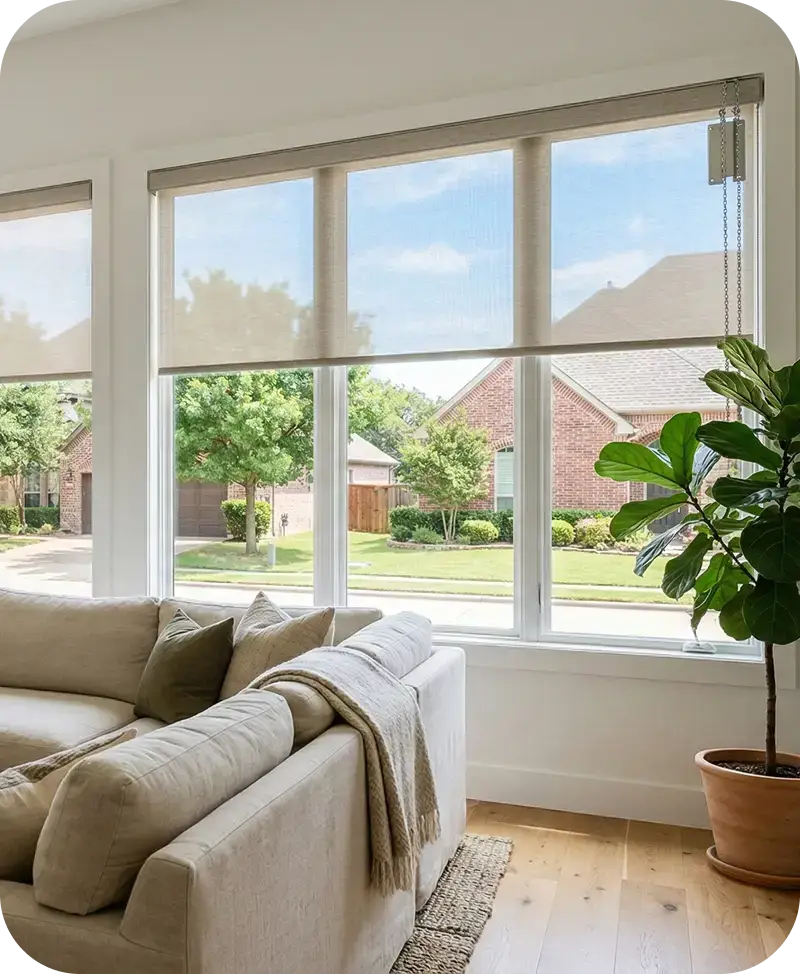
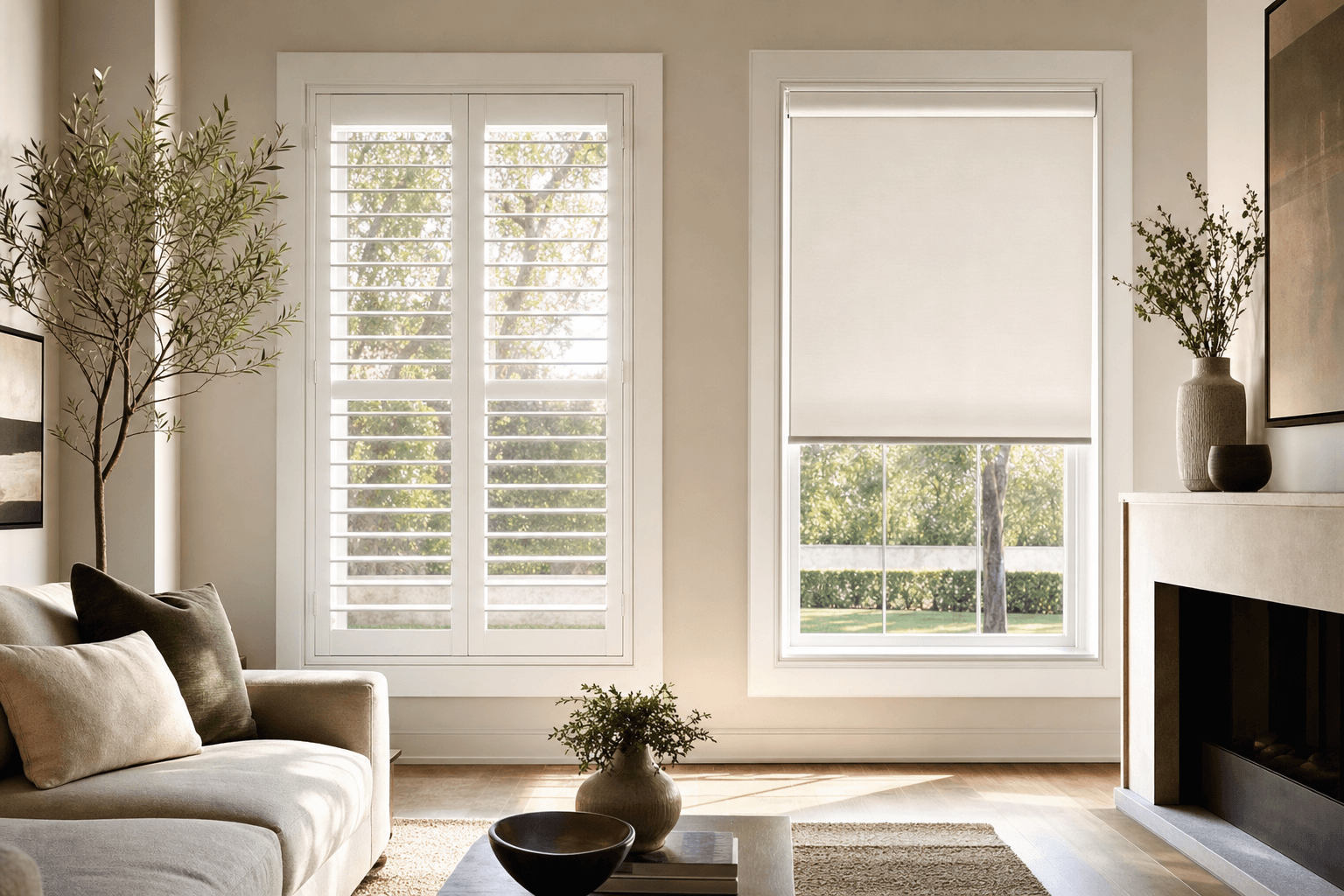
The short version: Choose plantation shutters when you want a permanent, classic feature that controls light precisely and tends to stay with the home at resale. Choose roller shades when you want a clean, modern look, a smaller footprint, and a friendlier price. Many homes use shutters in front rooms and roller shades everywhere else.
Plantation shutters and roller shades sit at two ends of the window-treatment spectrum. One is a built-in architectural feature. The other is a soft, simple cover that disappears when raised. Both are excellent. The right choice depends on the room, the budget, and how long you plan to stay. Here is how the two compare.
Plantation shutters vs. roller shades: what is the difference?
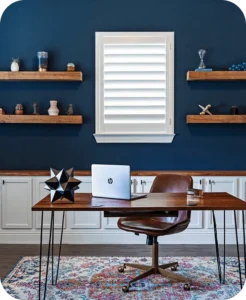
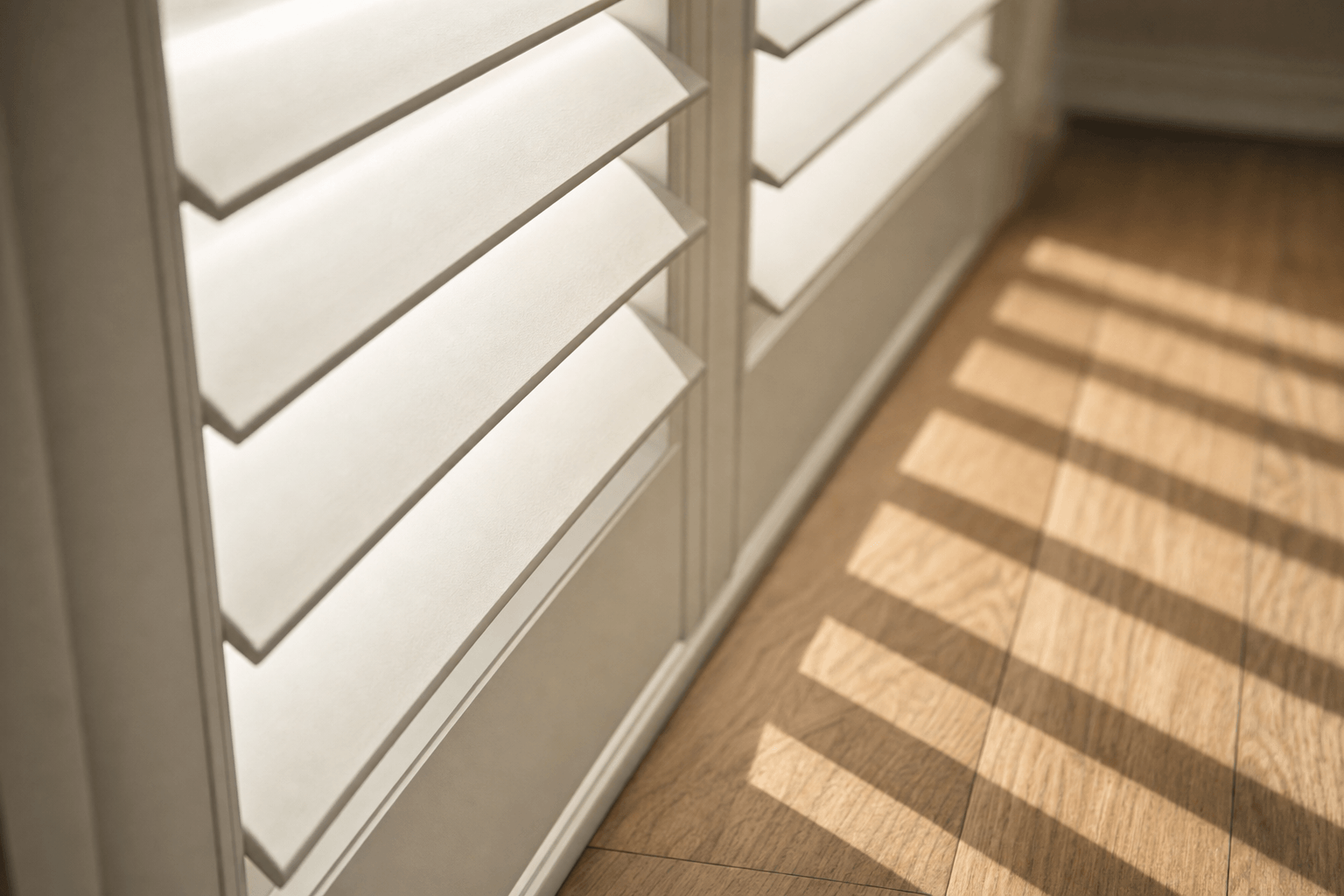
Plantation shutters are solid panels with wide, adjustable louvers, mounted in a frame around the window. They tilt open and closed for precise light and privacy control, and they read as part of the architecture. Roller shades are a single piece of fabric on a slim headrail that rolls up out of sight. You choose the fabric opacity, from sheer light filtering to full blackout, and the shade does the rest.
You can see the full range of both in our interior shutters and interior shades collections, but the decision usually comes down to the trade-offs below.
When are plantation shutters the better choice?
Shutters make sense when you want permanence and presence:
- Long-term homes. Shutters are typically treated as a fixture and stay with the house when you sell, so they read as a lasting improvement rather than a temporary cover.
- Classic and transitional interiors. The clean lines and depth of real louvers suit traditional and transitional rooms beautifully.
- Precise light control. Tilting the louvers lets you dial in light and privacy at the same time, something a single roller shade cannot do.
- Specialty shapes. Arches, tall windows, and divided sections are all natural territory for custom shutters.
If you are weighing brands and louver sizes, our guide to the top plantation shutter brands and options is a good next read.
When are roller shades the better choice?
Roller shades win on flexibility and value:
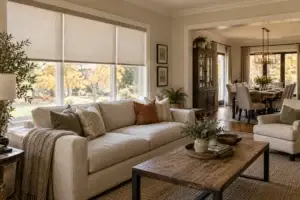
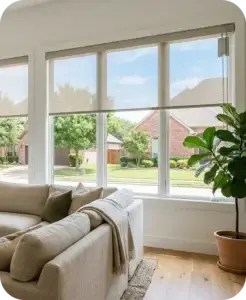
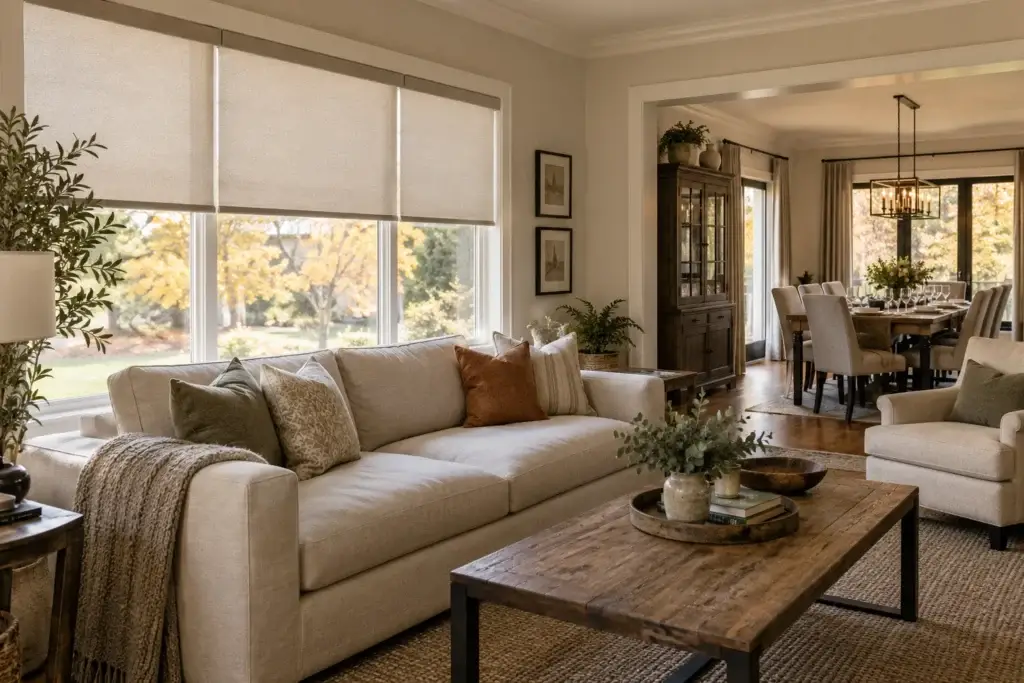
- Modern, minimal rooms. A roller shade is about as clean as a window treatment gets, and it lets the window and the view do the talking.
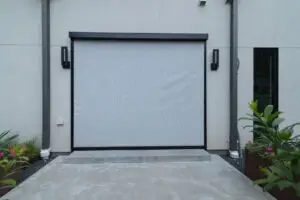
- Tight footprints. Rolling into a slim headrail, a roller shade takes almost no space and never needs clearance to open.
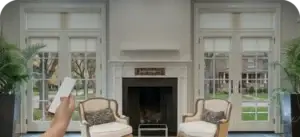
- Big glass. Wide windows and picture windows are easy territory for roller shades, especially motorized ones.
- Budget and flexibility. Roller shades cost less than custom shutters and are easy to restyle later if your taste changes.
| Factor | Plantation shutters | Roller shades |
|---|---|---|
| Style | Classic, architectural, built-in look | Clean, modern, minimal |
| Light control | Tilt louvers for precise, adjustable light and privacy | Up and down; choose fabric opacity from sheer to blackout |
| Permanence | Treated as a fixture; typically stays with the home | Easily swapped or restyled later |
| Footprint | Frame around the window; louvers need clearance to tilt | Rolls into a slim headrail; space-saving |
| Best windows | Standard and specialty shapes, divided sections | Wide windows, large glass, simple rectangles |
| Cost | Premium, long-term investment | Budget-friendly to mid-range |
Think of shutters as part of the house and roller shades as part of the decor. One you build in; the other you can change with the seasons.
You do not have to pick just one
The most satisfying homes often use both: plantation shutters in the rooms guests see and the windows that define the front of the house, and roller shades in bedrooms, media rooms, and wide modern openings where simplicity and budget matter more. Both options are available cordless, which keeps them safer around children and pets in line with current window-covering safety guidance.
Want help mapping the right treatment to each room? Request a quote and we will put together a plan that fits the home and the budget.
Sources
- Window Covering Manufacturers Association (WCMA), ANSI/WCMA A100.1-2022 safety standard and cordless window-covering guidance. windowcoverings.org