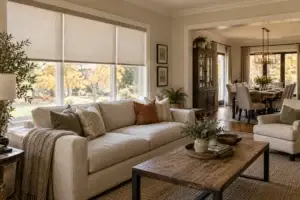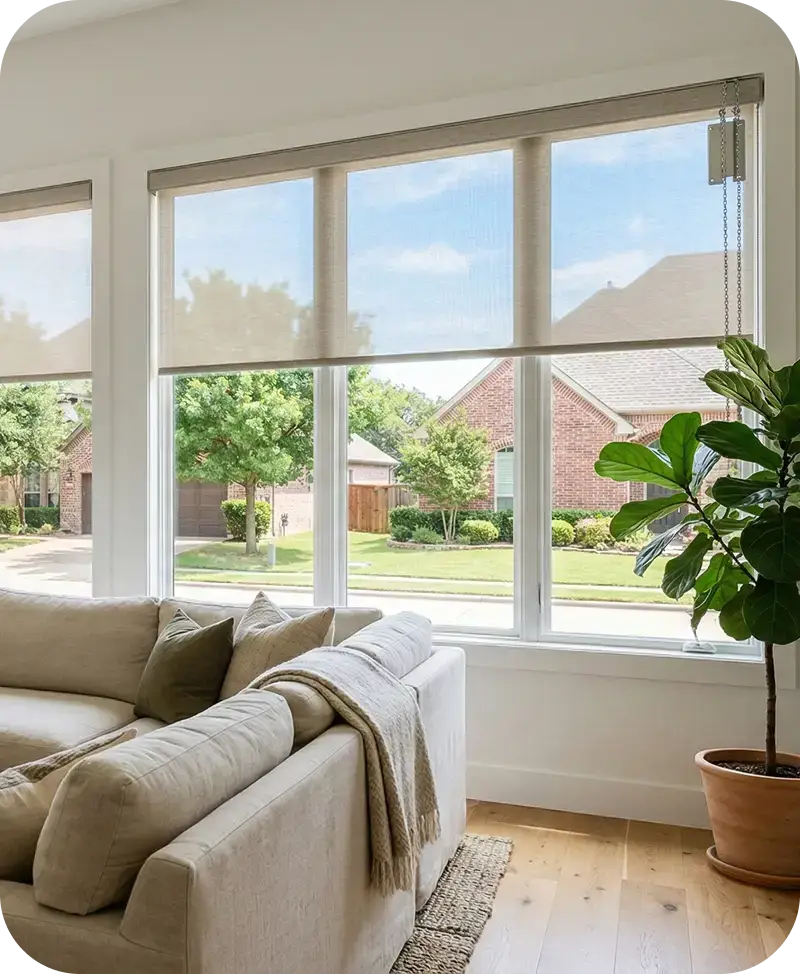
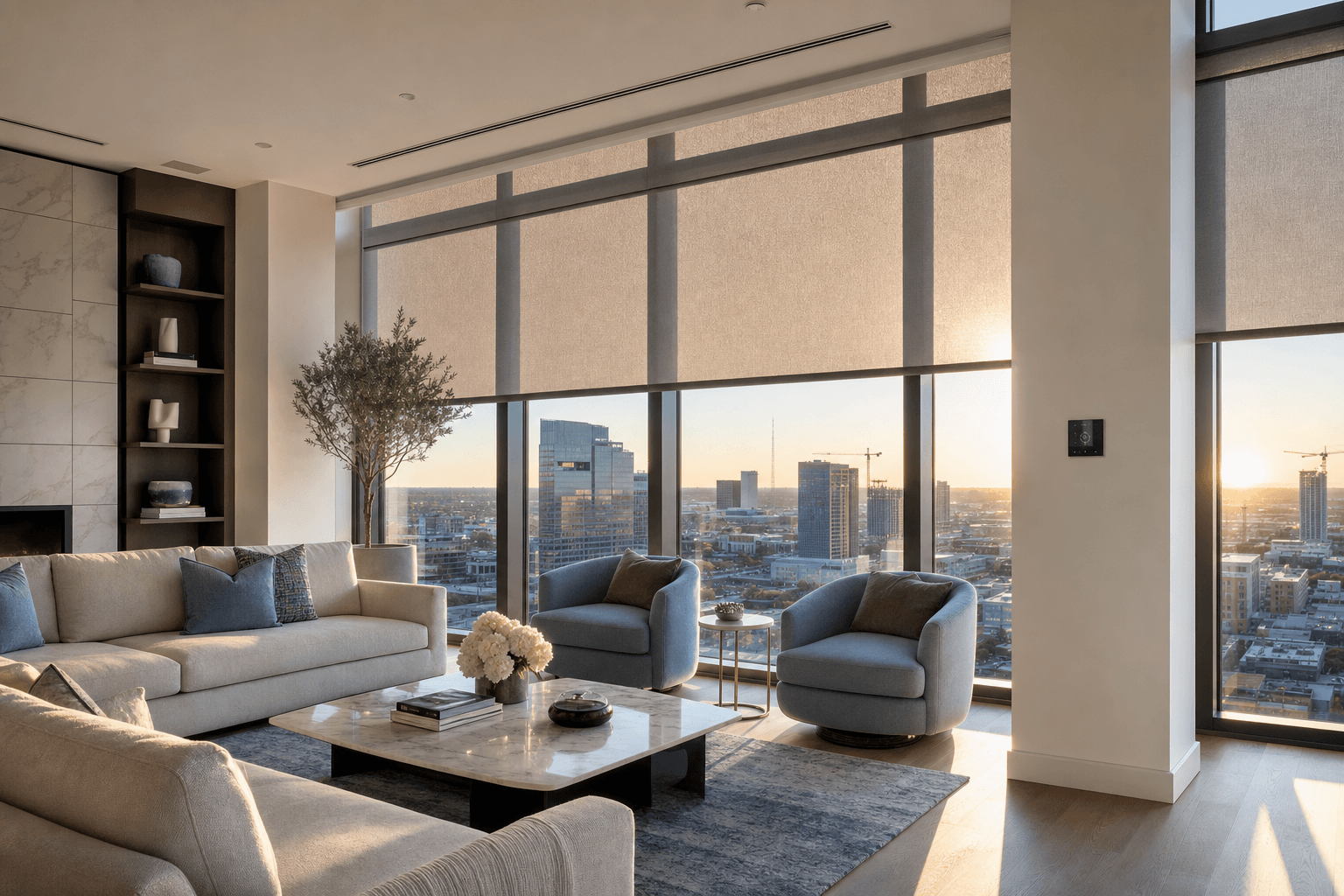
The short version: Motorized shades win when windows are large, tall, or hard to reach, and when you want them to close on a schedule to block peak afternoon sun. Manual shades win on upfront cost and simplicity. If a window is easy to reach and the budget is tight, manual is fine; otherwise, motorize it.
Choosing between motorized and manual shades comes down to three things: how often you adjust the window, how easy it is to reach, and how much you want to spend. Both can use the same fabrics and the same opacities, so this is not a question of style. It is a question of how the shade works day to day. Here is how to decide.
What is the real difference between motorized and manual shades?
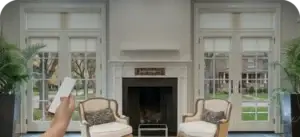
A manual shade is raised and lowered by hand, usually with a cordless lift or a continuous-loop chain. A motorized shade does the same job with a small motor you control by remote, wall switch, app, or voice. The fabric, the look, and the light control can be identical. What changes is the effort, and what becomes possible once a shade can move on its own.
That second point matters more than most people expect. Because a motor can run on a schedule, motorized shades can lower themselves during the hottest part of the day and rise again in the evening, without anyone lifting a finger. On a wall of interior shades, that is the difference between shading you actually use and shading you forget to adjust.
When are motorized shades worth it?
Motorization earns its cost in a few clear situations:
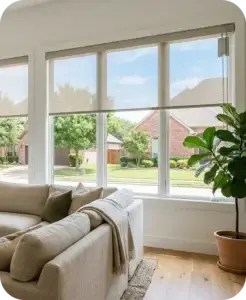
- Tall or hard-to-reach windows. Stairwell windows, transoms, and tall great-room glass are awkward or unsafe to reach. A motor removes the ladder.
- Large or heavy shades. Oversized rollers get heavy. A motor lifts them smoothly where a manual lift would feel stiff.
- Many windows at once. A single press can move a whole room or a whole side of the house, which is genuinely useful for managing afternoon heat.
- Smart-home households. If you already run a smart-home system, shades that respond to schedules, scenes, or voice fit right in.
- Child and pet safety. Motorized shades have no pull cords or chains at all, which aligns with the current cordless direction of the national window-covering safety standard.
When do manual shades make more sense?
Manual shades are the right call more often than the marketing suggests. For windows you can reach easily and adjust once or twice a day, a quality cordless manual shade does everything you need for less money and with fewer parts to maintain. Bedrooms, home offices, and standard-height windows are all natural fits. If you are shading a single easy-to-reach window, paying for a motor mostly buys novelty.
| Factor | Motorized shades | Manual shades |
|---|---|---|
| Best for | Large, tall, or hard-to-reach windows; multi-window rooms; smart homes | Easy-to-reach windows; single windows; tighter budgets |
| Daily use | Remote, wall switch, app, voice, or automatic schedule | Adjusted by hand, one window at a time |
| Upfront cost | Higher (motor and control add to the price) | Lower |
| Child and pet safety | No cords or chains at all | Choose cordless lifts, especially near children |
| Energy use | Can auto-close during peak sun to cut heat gain | Depends on you remembering to adjust |
| Maintenance | Battery charging or wiring; occasional motor care | Minimal; fewer moving parts |
The honest rule of thumb: motorize the windows you cannot easily reach or want on a schedule, and keep manual shades where a quick pull of the hand already does the job.
How to decide for your home
Walk your house and sort windows into two piles: easy to reach and adjusted occasionally, versus hard to reach, oversized, or facing harsh afternoon sun. The first pile is happy with manual shades. The second pile is where motorization pays off in comfort, safety, and energy savings. Many homes end up with a mix, and that is exactly right.
Not sure which windows fall where? Request a quote and we will walk the rooms with you. If you do go motorized, our motorized roller shade maintenance tips will keep everything running smoothly for years.
Sources
- Window Covering Manufacturers Association (WCMA), ANSI/WCMA A100.1-2022 safety standard for corded and cordless window coverings. windowcoverings.org