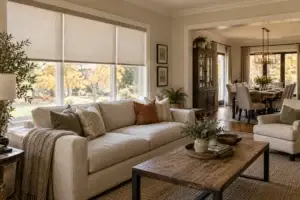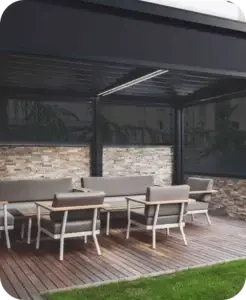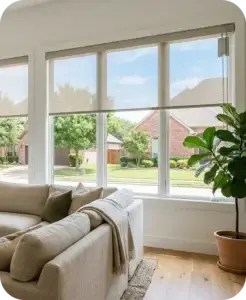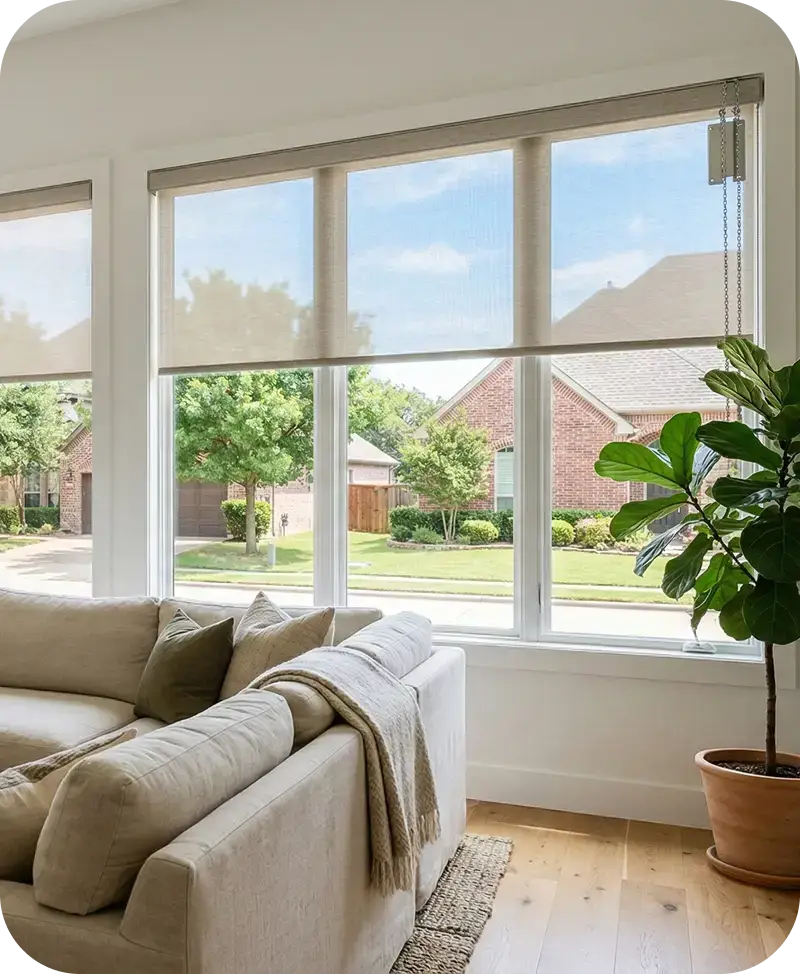
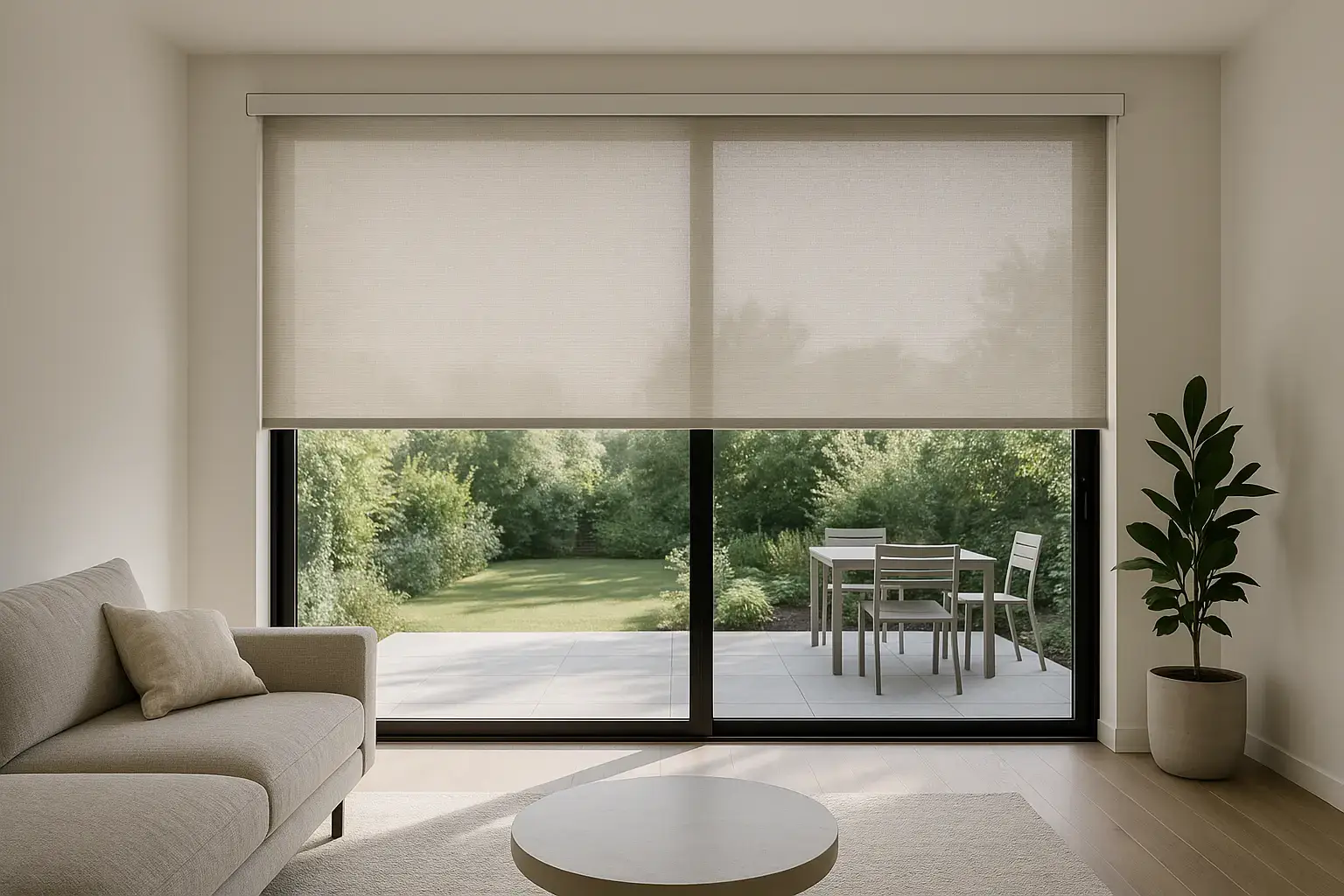
The short version: For wide windows and sliding glass doors, the best options are panel-track shades, vertical cellular shades, motorized roller shades, and wide-louver or sliding shutter panels. They span big openings, handle strong sun, and stand up to daily use far better than standard horizontal blinds, which sag and bunch at width.
Large windows and sliding glass doors are the showpieces of a home, and also the hardest to cover well. A treatment that looks great on a standard window can sag, bunch, or get in the way of a door that people walk through every day. The trick is matching the right mechanism to the size and the traffic. Here are the options that actually work at scale.
What makes large windows and sliding doors tricky?
Three things. First, width and weight: a covering wide enough for a patio door is heavy, and cheap mechanisms struggle with it. Second, daily traffic: a sliding door is also a walkway, so the treatment has to move out of the path easily and reliably. Third, sun and heat: big glass collects a lot of afternoon sun, so the covering is doing real work on comfort, not just privacy. The best choices solve all three at once.
Best shade types for big openings
These four handle large spans gracefully:
- Panel-track shades. Wide fabric panels glide along a track and stack neatly to one side. They are purpose-built for sliding doors and very wide windows.
- Vertical cellular shades. Honeycomb construction that opens side to side, so you get insulation and a clean look across tall, wide openings.
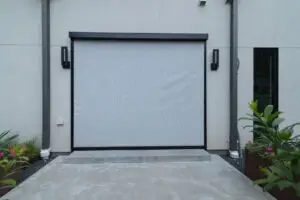
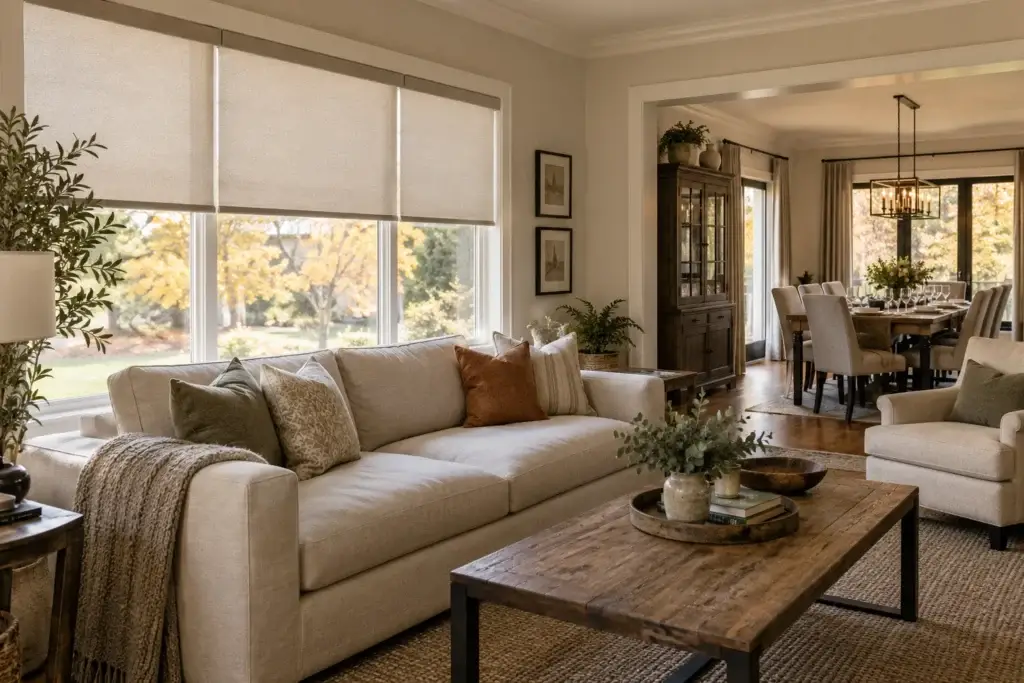
- Motorized roller shades. One motor smoothly handles an oversized roller that would be heavy and awkward by hand, which is why large glass is where motorization pays off most.
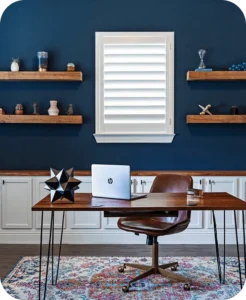
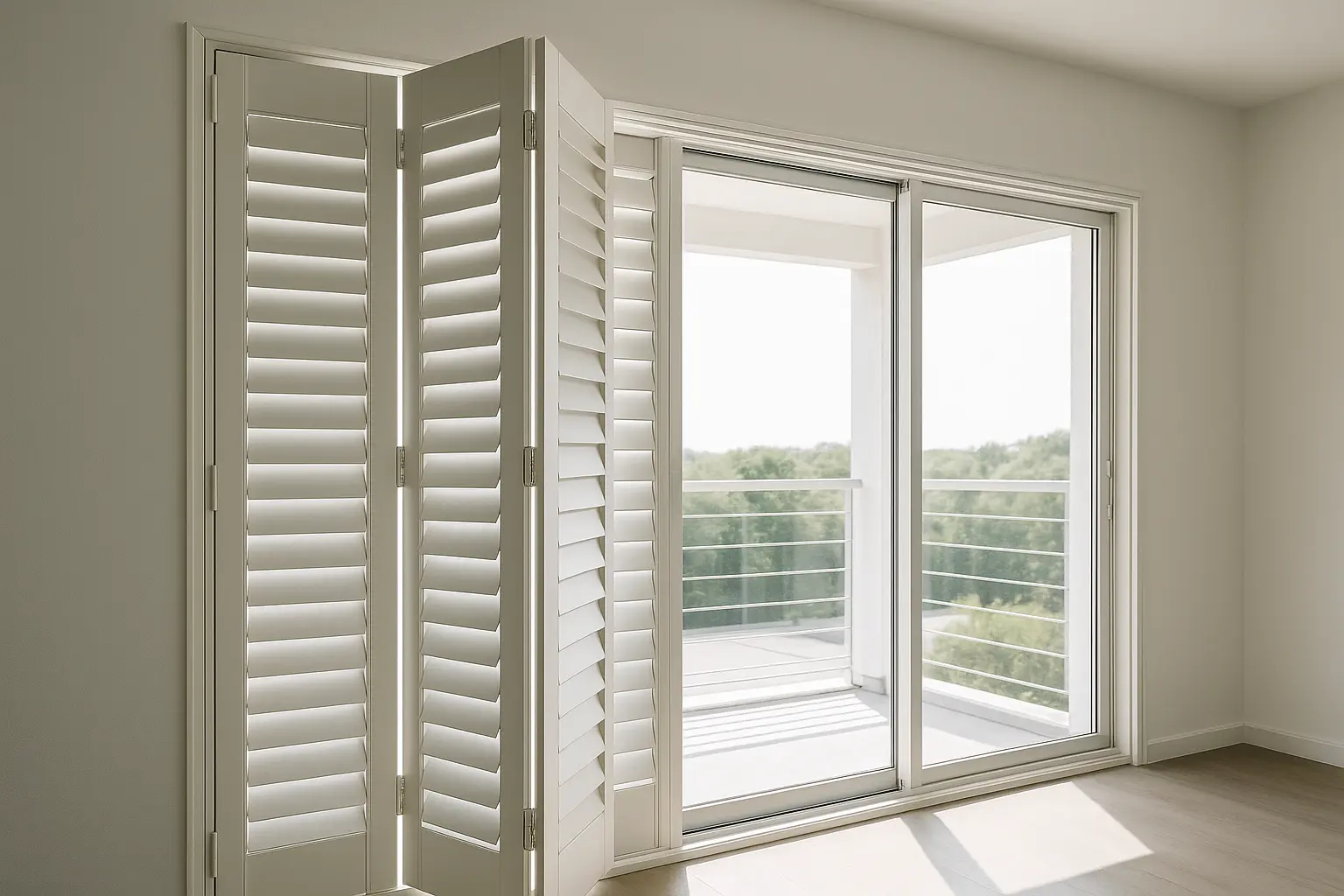
- Wide-louver shutters and sliding shutter panels. An architectural option that spans large or divided openings; see why foldable shutters are great for large openings.
| Shade type | Why it fits big openings | Watch-outs |
|---|---|---|
| Panel-track shades | Wide panels glide on a track; ideal for sliding doors | Panels stack to one side, so they need some wall clearance |
| Vertical cellular shades | Insulating honeycomb that opens side to side for tall spans | Fewer fabric and opacity choices than roller shades |
| Motorized roller shades | One motor handles heavy, oversized rollers smoothly | Higher upfront cost; needs battery charging or wiring |
| Wide-louver / sliding shutters | Architectural look that spans large or divided openings | Louvers and panels need clearance to tilt or fold |
Why motorization matters more at scale
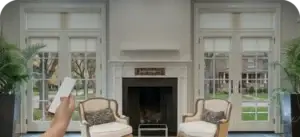
The bigger the covering, the more a motor earns its place. Heavy shades are tiring to operate by hand, and a wall of large glass is exactly where you want everything to close together during peak sun. Motorized coverings are also fully cordless, which keeps large, reachable shades safer around children and pets in line with current window-covering safety guidance. If you go this route, keep things running with our motorized roller shade maintenance tips.
For a sliding door you use every day, the question is not just how it looks closed, but how easily it gets out of your way when it is open.
Choosing the right one for your space
Match the treatment to how the opening is used. For a busy patio door, panel-track shades keep the walkway clear. For a tall great-room window, vertical cellular shades add insulation and reach. For oversized picture windows, a motorized roller shade is the smooth, simple answer. And when you want architecture rather than fabric, wide-louver or sliding shutters deliver.
Have a big opening you have never been happy with? Request a quote and we will measure, recommend, and handle the install.
Sources
- Window Covering Manufacturers Association (WCMA), ANSI/WCMA A100.1-2022 window-covering safety standard. windowcoverings.org
- U.S. Department of Energy, Energy Saver, window covering and heat-gain guidance. energy.gov