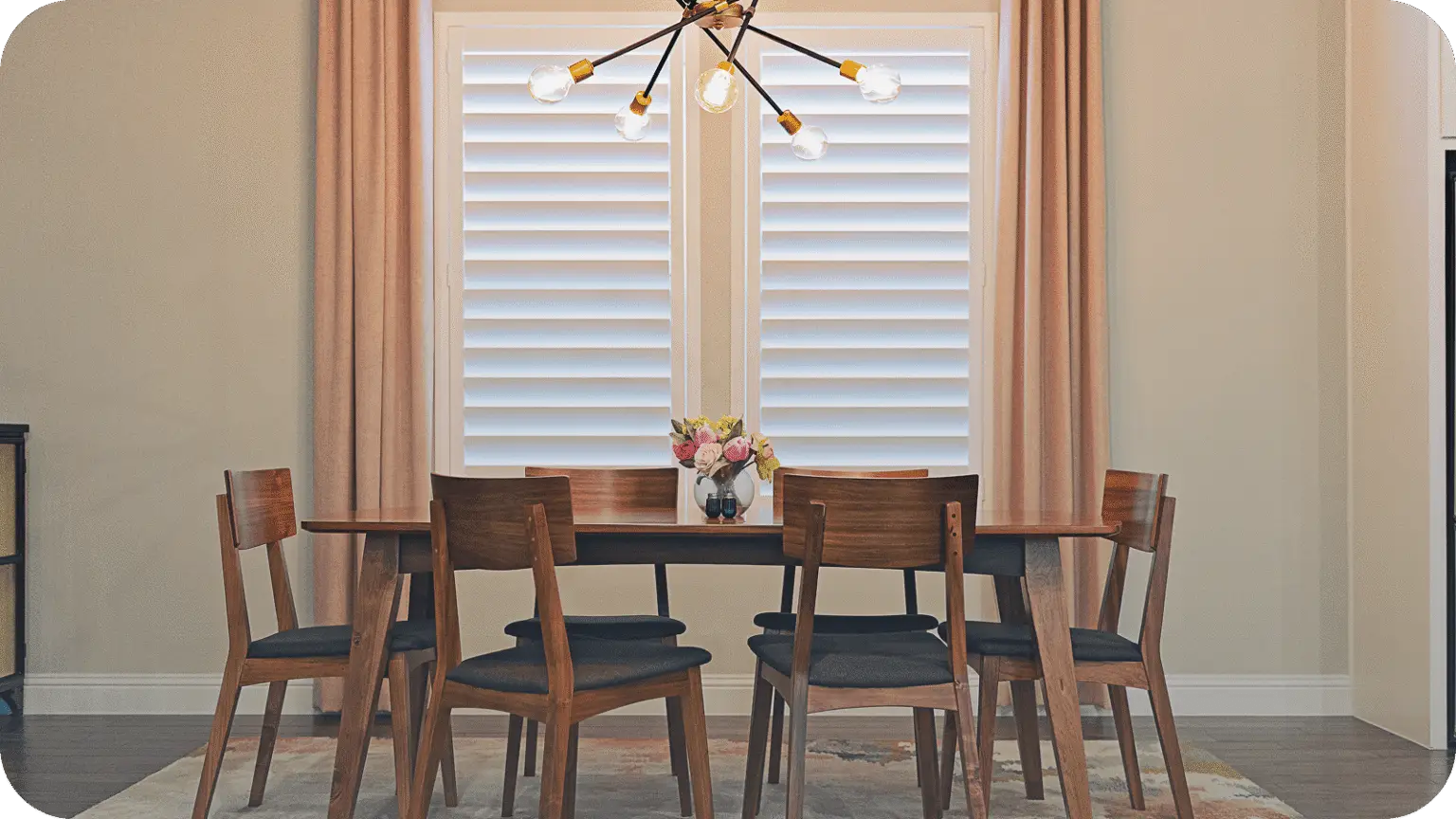
The short version: Choose window treatments by what each room actually needs, not by what looks good in a showroom. Living rooms want light control and a view; bedrooms want darkness and privacy; kitchens and baths want moisture resistance and easy cleaning; kids’ rooms want cordless safety. Start with the job, then pick the opacity, then choose the style.
Buying the same shade for every window is the most common mistake we see, and it almost always leads to a room that is too bright, too dark, or too hard to live with. A better approach is to walk the house room by room and ask one question at each window: what is this treatment really for? Once you know the job, the right product gets obvious. Here is how to think it through space by space.
Start with the job each room does
Every room has a primary demand. A living room is about light and view. A bedroom is about sleep and privacy. A kitchen is about moisture and mess. A nursery is about safety above all. When you lead with the job, opacity and style fall into place instead of fighting each other. The same logic runs through our deeper guide on how to choose the right window coverings for every room, and the room-by-room breakdown below puts it to work.
Living and dining rooms
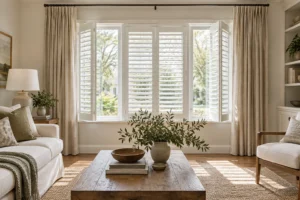
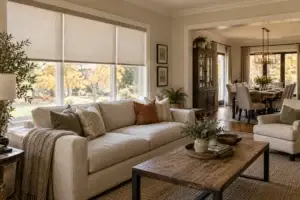
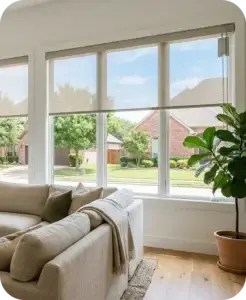
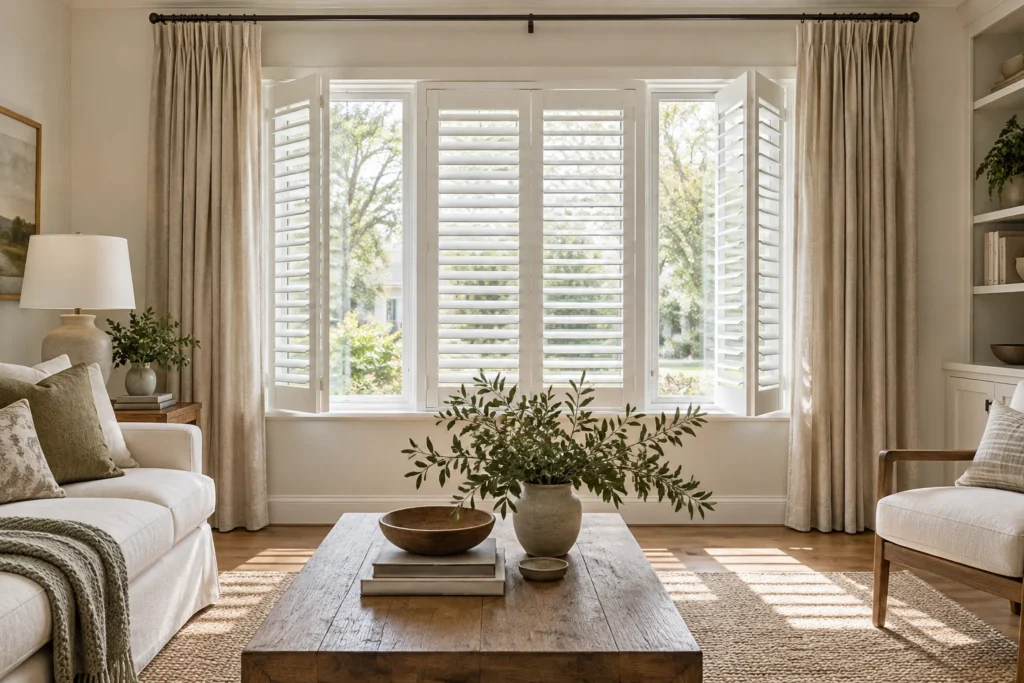
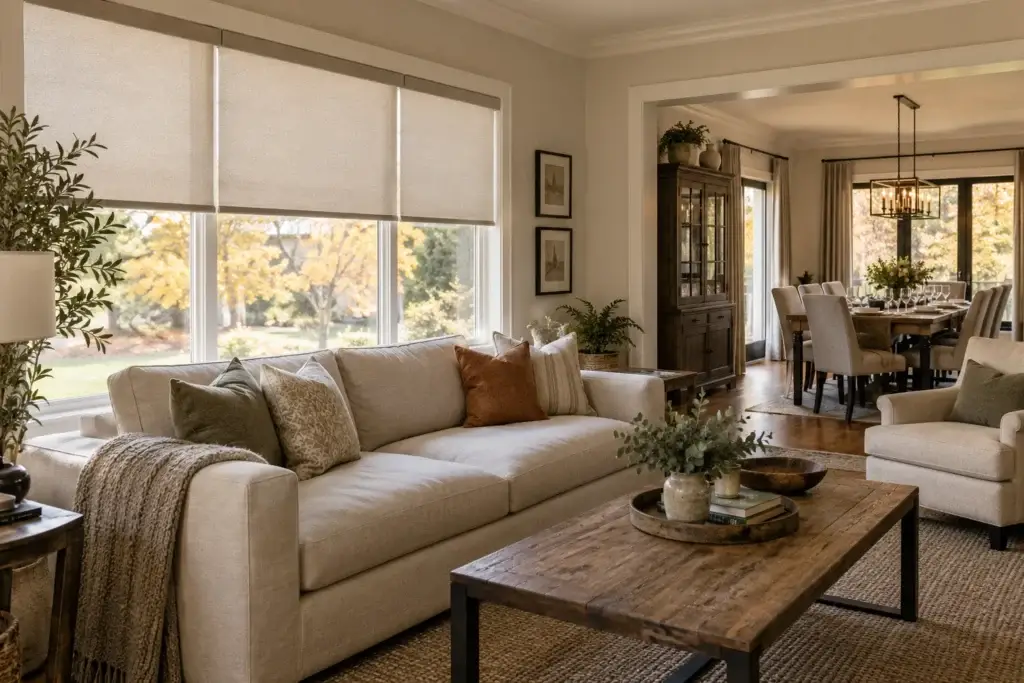
These are the rooms you show off, so light quality and looks lead. Light-filtering roller shades keep the space bright while softening glare and protecting furniture from harsh sun. Plantation shutters add a built-in, architectural feel and let you tilt the louvers for privacy without losing the room’s character. If you love a layered look, pair a shade with drapery for warmth and a bit of drama, the way we lay out in our living room curtain ideas. Explore the full range in our interior shades and interior shutters collections.
Bedrooms
Here the priority flips to darkness and privacy. Blackout roller shades keep the room dark for real rest, and an outside mount or side channels close the light gaps at the edges. Many bedrooms do best with two layers: a blackout shade for sleep and a drapery panel or shutter for daytime softness. We go deep on this in the bedroom post later in this batch, and our guide to light-filtering vs. blackout shades helps you pick the right opacity.
Kitchens and bathrooms
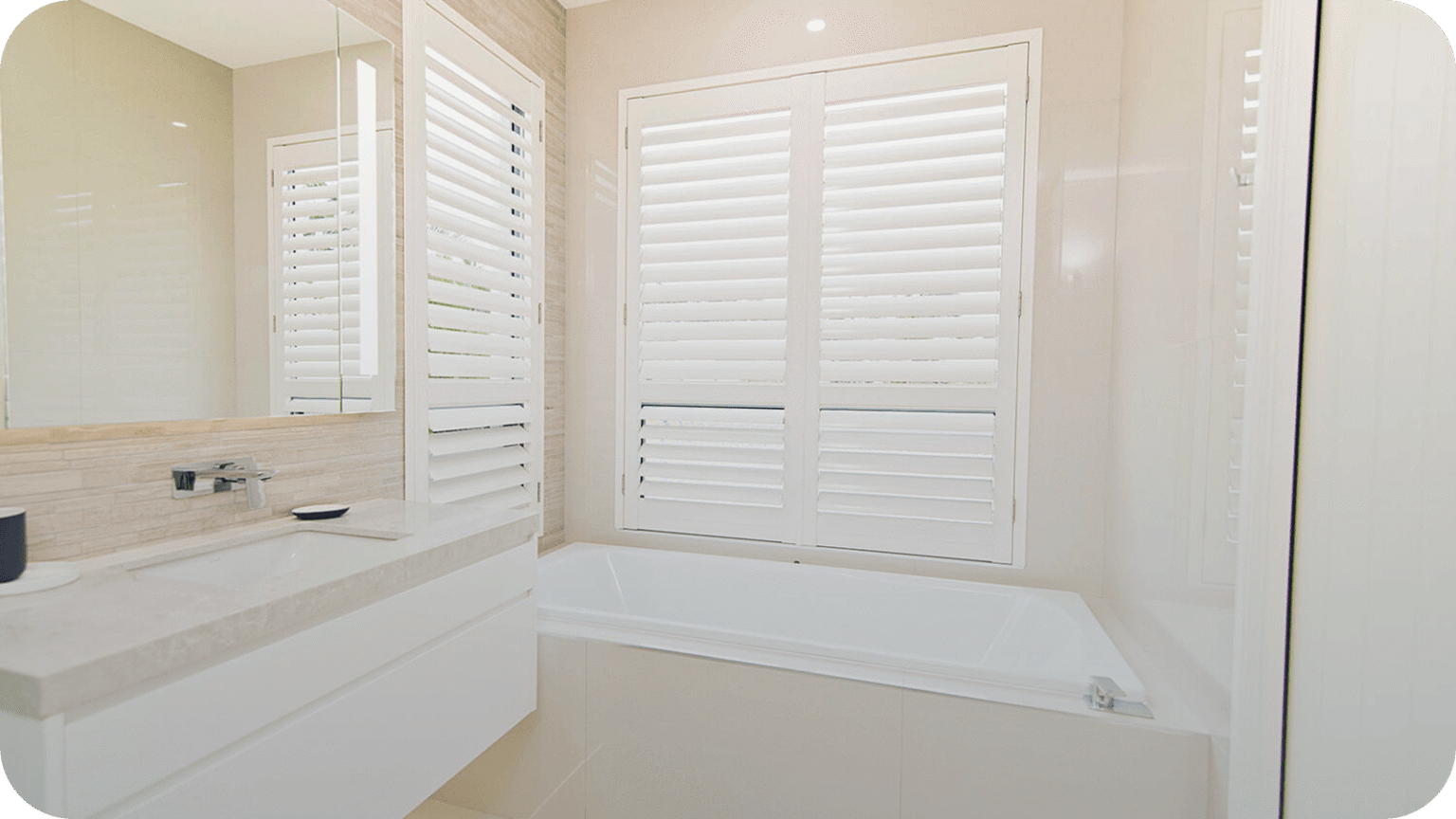
Moisture, steam, and splatter rule these rooms, so choose materials that shrug them off. Moisture-resistant composite (poly) shutters and easy-clean roller shades resist humidity and wipe down in seconds, where delicate fabrics can warp or stain. Bathrooms add a privacy demand, especially on the ground floor and street-facing windows, where plantation shutters let you tilt the louvers for light up high while staying covered at eye level. For tricky exposures, our roundup of privacy shades for street-facing rooms is a useful starting point.
Kids’ rooms and nurseries
In any room a young child can reach, safety comes before everything else. Corded blinds are a genuine hazard for small children, which is why we steer parents toward cordless lift shades or fully motorized coverings with no cords or chains at all. This lines up with the current national window-covering safety standard, which now makes cordless the default for stock products. We cover this in detail in the child-safety post in this batch, but the short rule is simple: no cords where kids can reach.
Home offices and media rooms
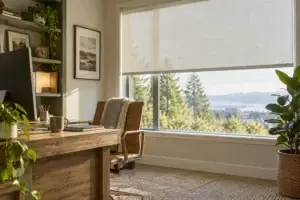
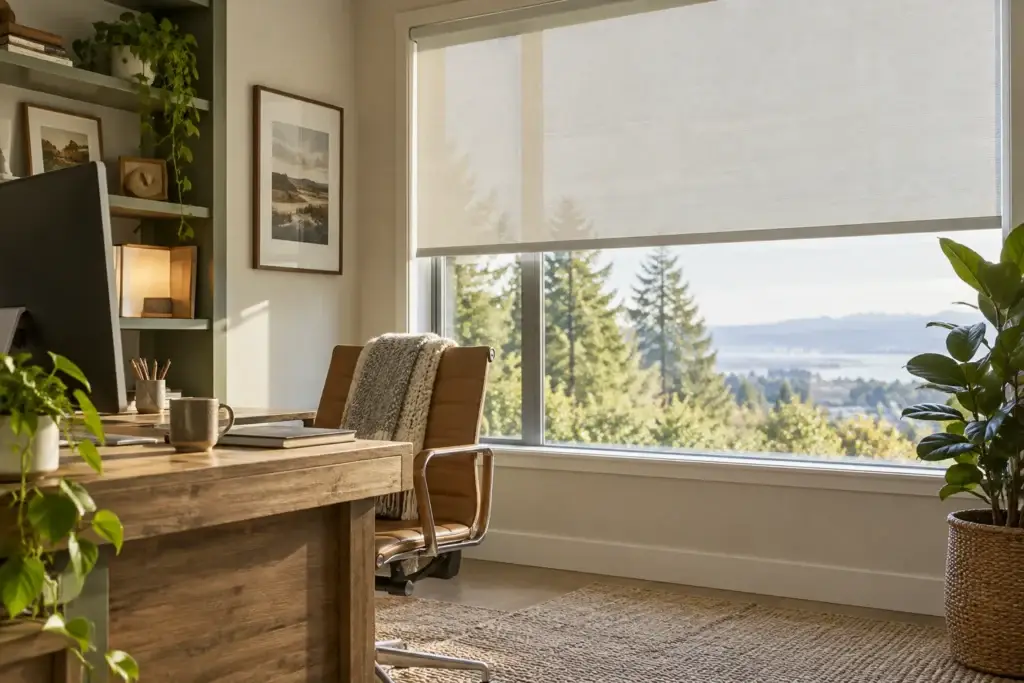
These rooms are about controlling glare on a screen. In a home office, light-filtering shades cut glare while keeping enough daylight to work by, and a dual (zebra) shade lets you dial from a clear view to soft, glare-free light for video calls with backlit windows. Media rooms want the opposite of a living room: blackout shades that kill reflections and let the picture pop, ideally motorized so the whole room dims with one tap.
| Room | What it needs most | Good fits |
|---|---|---|
| Living / dining | Light quality, view, style | Light-filtering shades, plantation shutters, layered drapery |
| Bedrooms | Darkness and privacy | Blackout roller shades, optional drapery or shutters |
| Kitchens / baths | Moisture resistance, easy cleaning, privacy | Moisture-resistant composite shutters, easy-clean roller shades |
| Kids’ rooms / nurseries | Cordless safety | Cordless lift shades, motorized shades, plantation shutters |
| Office / media | Glare and screen control | Light-filtering or dual (zebra) shades; blackout for media rooms |
The best window treatment for a room is the one that does the room’s job without you having to think about it.
Putting a whole-home plan together
You do not have to use the same product everywhere, and the best homes rarely do. A typical plan might be plantation shutters in the front rooms, blackout roller shades in the bedrooms, moisture-resistant composite shutters in the baths, and cordless shades in the kids’ rooms, all in a coordinated palette so the house still reads as one. The trick is consistency in color and finish, with the right mechanism behind each window.
Want a plan mapped to your specific rooms and exposures? Request a quote and we will walk the house with you, room by room.
Sources
- U.S. Department of Energy, Energy Saver, “Energy Efficient Window Coverings” (window covering light-control and energy guidance). energy.gov
- Window Covering Manufacturers Association (WCMA), ANSI/WCMA A100.1 safety standard and cordless guidance for stock products. windowcoverings.org