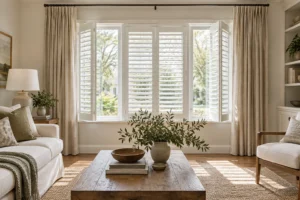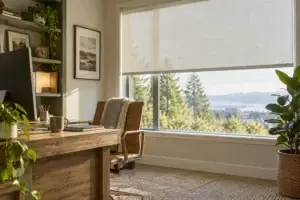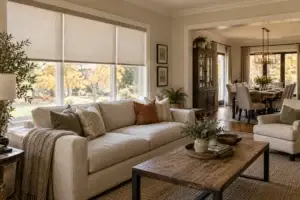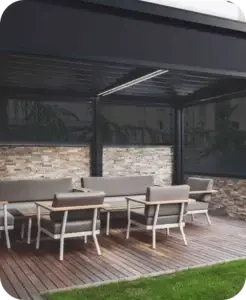
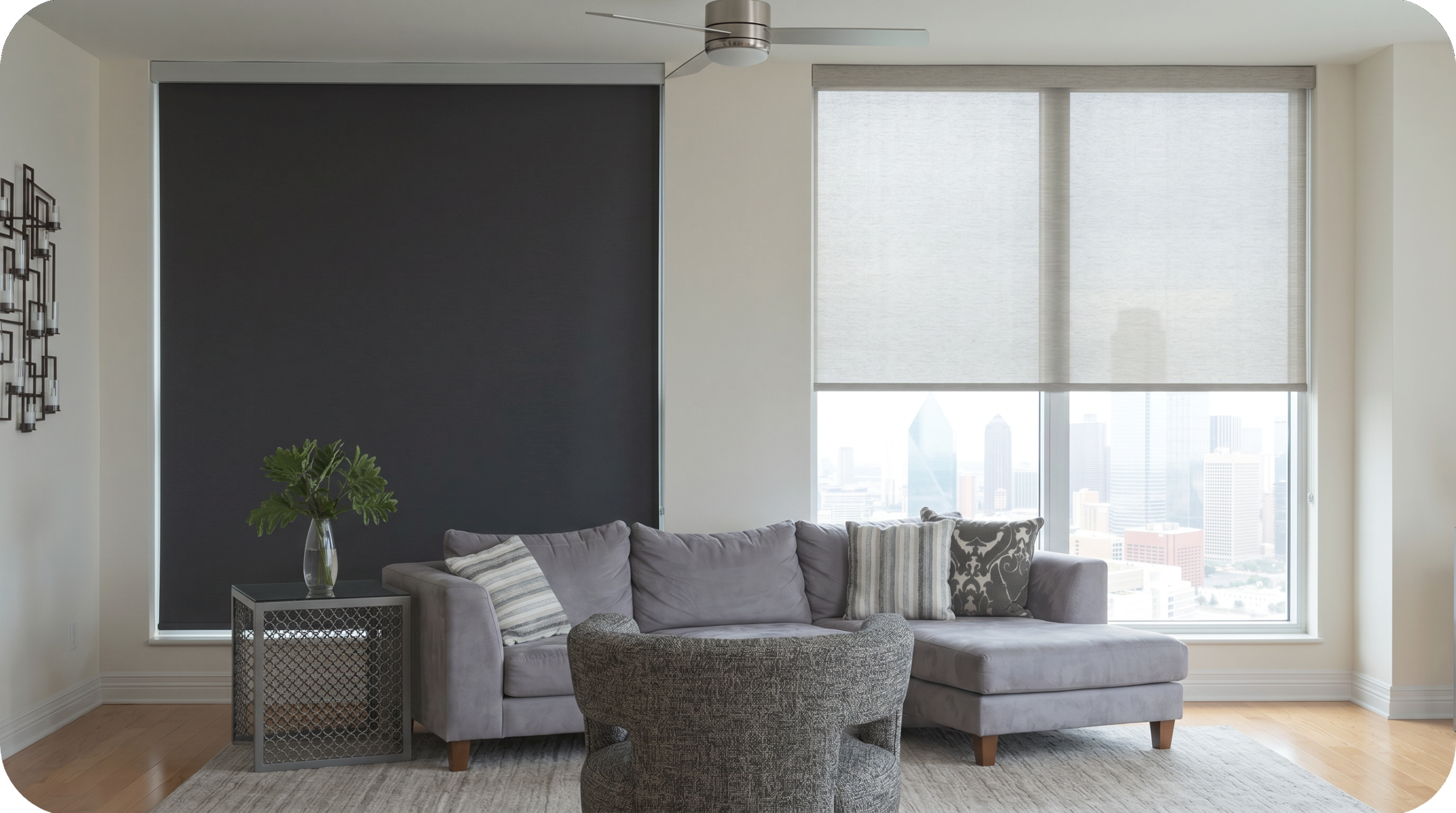
The short version: Light-filtering shades soften daylight and keep a room bright while adding daytime privacy. Blackout shades block nearly all light for sleep, screens, and shift work. Use light-filtering in living rooms, kitchens, and offices; use blackout in bedrooms, nurseries, and media rooms. Plenty of rooms do best with both, layered together.
Opacity is the single most important choice you make when buying a shade, and it is the one people most often get wrong. The same window can feel perfect or unbearable depending on whether the fabric filters light or blocks it. The good news is that the decision is simple once you know the four levels and which rooms each one serves. Here is the full picture.
What the opacity levels actually mean
Shade fabrics fall on a scale from most light to least:
- Sheer. Softens light and glare but keeps the view; offers little privacy on its own.
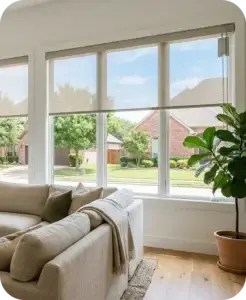
- Light-filtering. Glows with diffused daylight, hides the room’s details by day, and keeps things bright without harsh glare.
- Room-darkening. Blocks most light but not quite all; a middle option for rooms that want dim, not pitch black.
- Blackout. Blocks essentially all light through the fabric for the darkest possible room.
Our ultimate guide to light-filtering vs. blackout shades walks through each level in depth, but the two that matter most for everyday rooms are light-filtering and blackout.
Where light-filtering shades shine
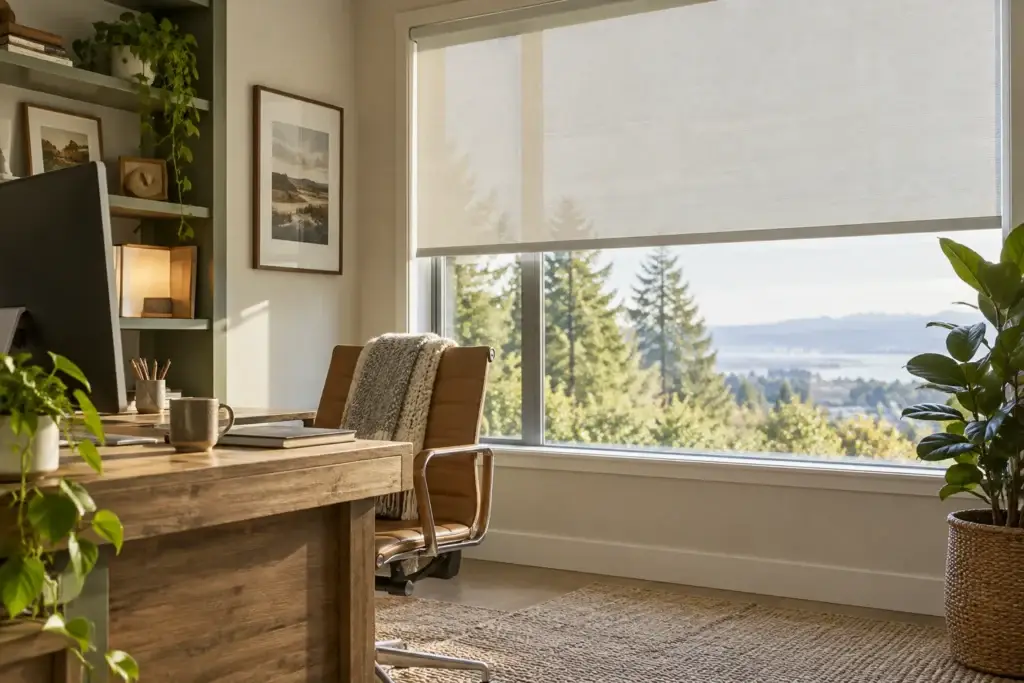
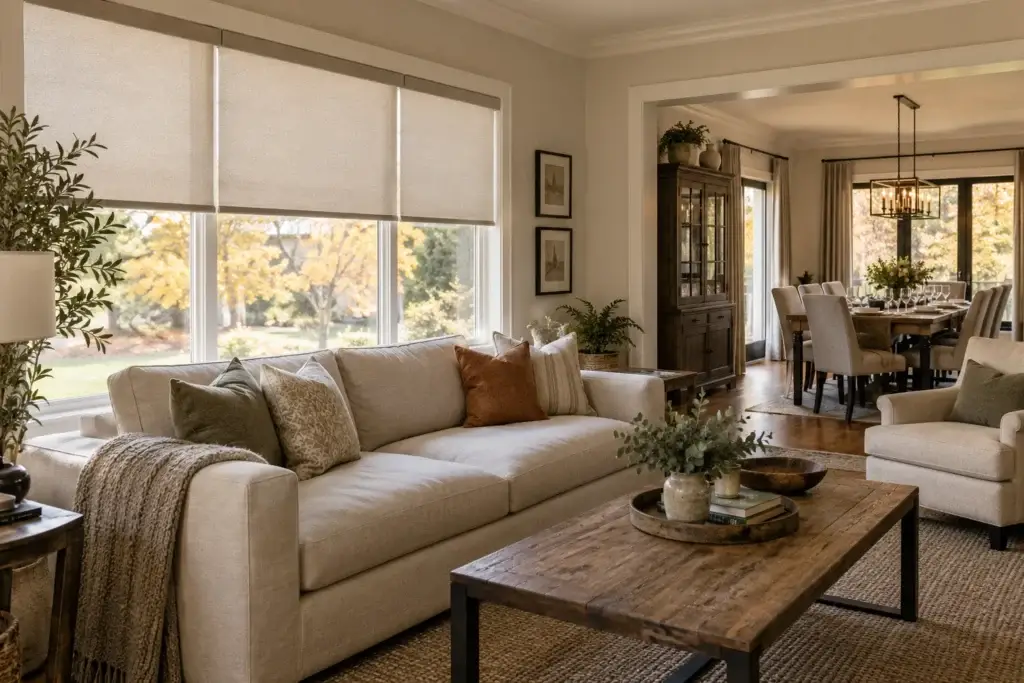
Light-filtering shades are the right call for the rooms where you want to stay bright and connected to the day. They diffuse direct sun into a soft, even glow that is easy on the eyes and flattering to a space, while screening the room from outside view in daylight. That makes them ideal for living and dining rooms, kitchens, home offices, and any space where you want light without glare. They also take some of the sting out of fading, though for serious sun protection you will want to pair them with our UV-blocking shade ideas.
Where blackout shades earn their place
Blackout shades are for the rooms where light is the enemy. Bedrooms are the obvious one: a dark room helps you fall asleep faster and stay asleep, which is why blackout is our default recommendation for primary bedrooms and especially nurseries, where daytime naps depend on it. Media rooms and home theaters need blackout to kill reflections and let the screen pop, and anyone working a night shift needs it to sleep through a bright morning. We cover the bedroom case in full in the next post in this batch.
A quick note on privacy
One thing surprises people: light-filtering shades give you daytime privacy but not nighttime privacy. After dark, when your interior lights are on and it is darker outside, a light-filtering shade can show silhouettes from the street. If a window faces a sidewalk or a neighbor, plan for blackout, a room-darkening liner, or a layered treatment on that specific window, regardless of what the rest of the room uses.
The best of both: layering
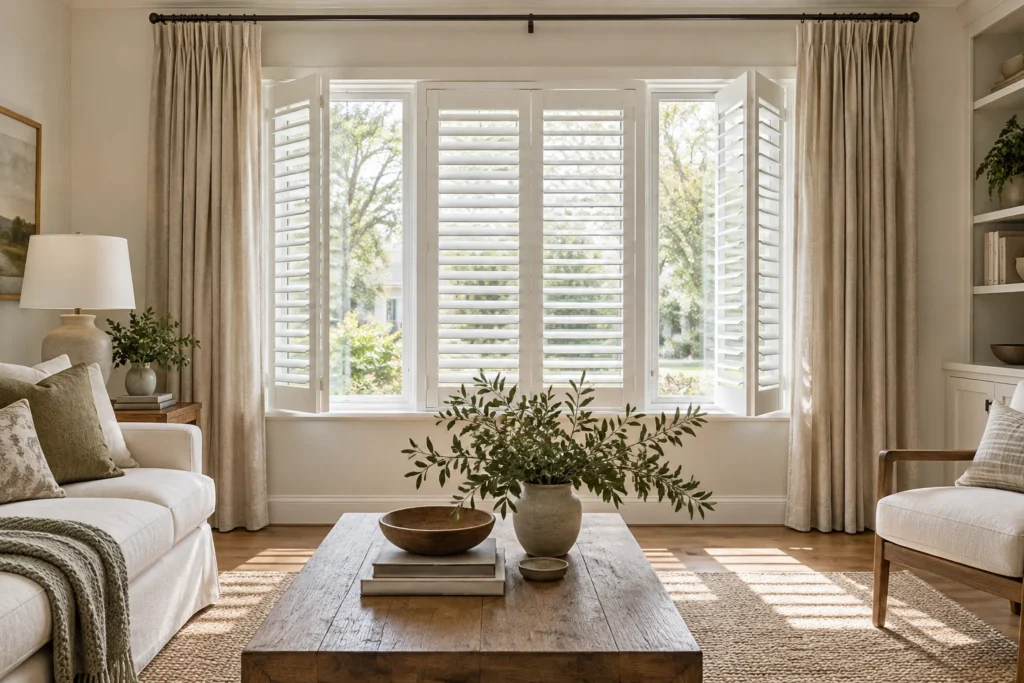
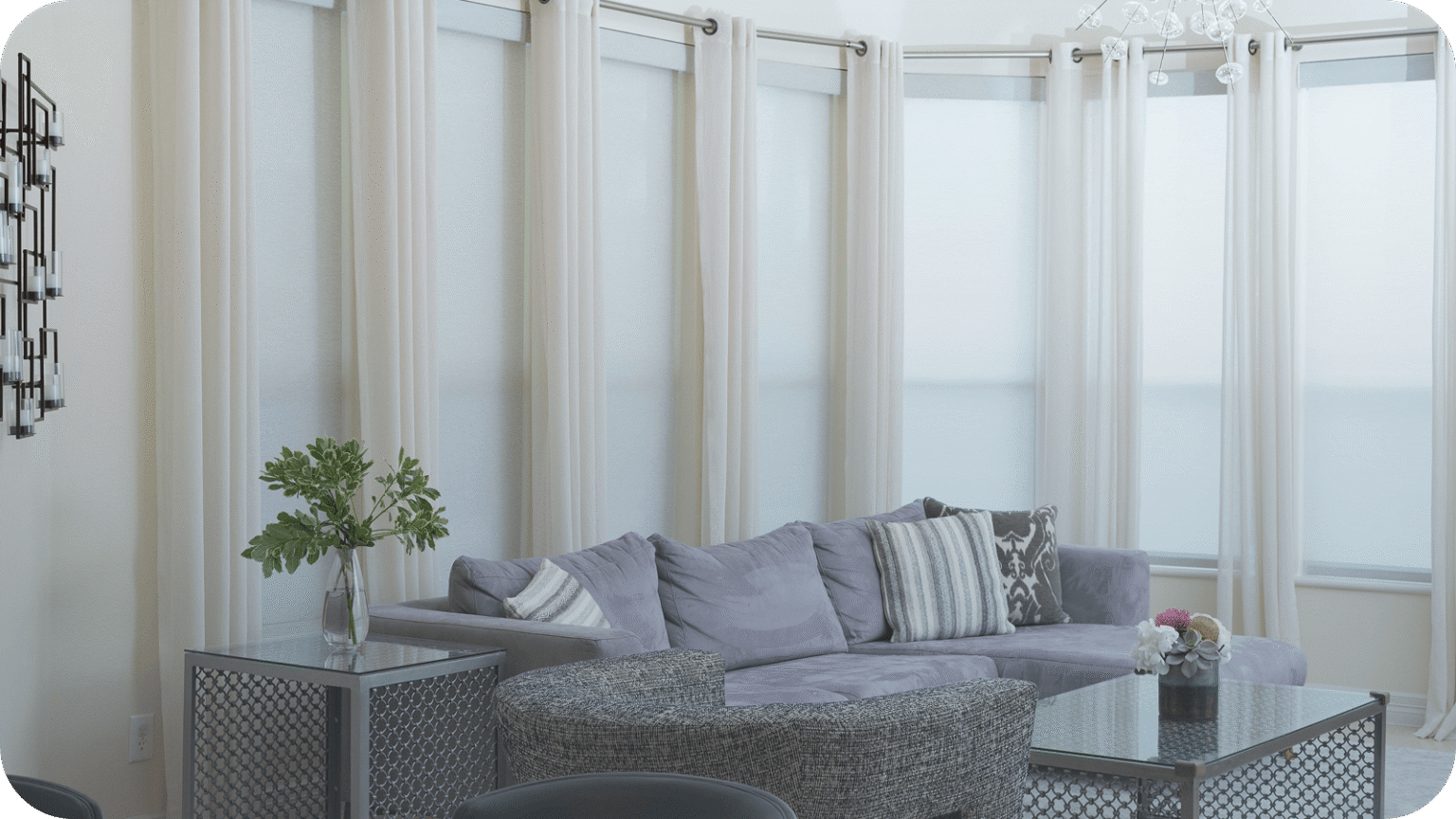
You are not limited to one or the other. Dual shades, sometimes called zebra shades, layer sheer and solid bands on one roller so you can glide from a clear view to soft, diffused light and daytime privacy. For true darkness, pair a blackout roller shade with drapery or a shutter that closes for full darkness when you want it. Layering like this is why our interior shades are so often specified alongside drapery in the same room.
| Factor | Light-filtering | Room-darkening | Blackout |
|---|---|---|---|
| Light blocked | Diffuses light; room stays bright | Blocks most light; dim but not dark | Blocks nearly all light |
| Best rooms | Living, dining, kitchen, office | Guest rooms, dens, flexible spaces | Bedrooms, nurseries, media rooms |
| Daytime privacy | Yes | Yes | Yes |
| Nighttime privacy | Limited when lit inside | Good | Full |
| Sleep and screens | Not ideal | Okay | Best |
Light-filtering is for rooms you want to live in by day. Blackout is for rooms you want to sleep or watch a screen in. Match the fabric to the moment.
How to choose for each room
Walk the house and label each window with its main job. Bright daytime room? Light-filtering. Sleep or screens? Blackout. Flexible guest space? Room-darkening, or a dual shade for everyday flexibility. Street-facing window in any room? Add privacy on that one. From there it is just choosing fabrics and colors you love.
Not sure where the line falls in your home? Request a quote and we will recommend the right opacity for every window.
Sources
- Sleep Foundation, guidance on darkness, light exposure, and sleep quality. sleepfoundation.org
- U.S. Department of Energy, Energy Saver, “Energy Efficient Window Coverings” (light control and fading guidance). energy.gov