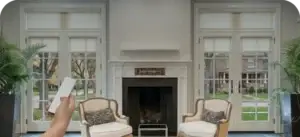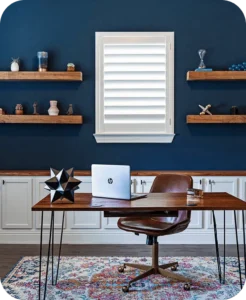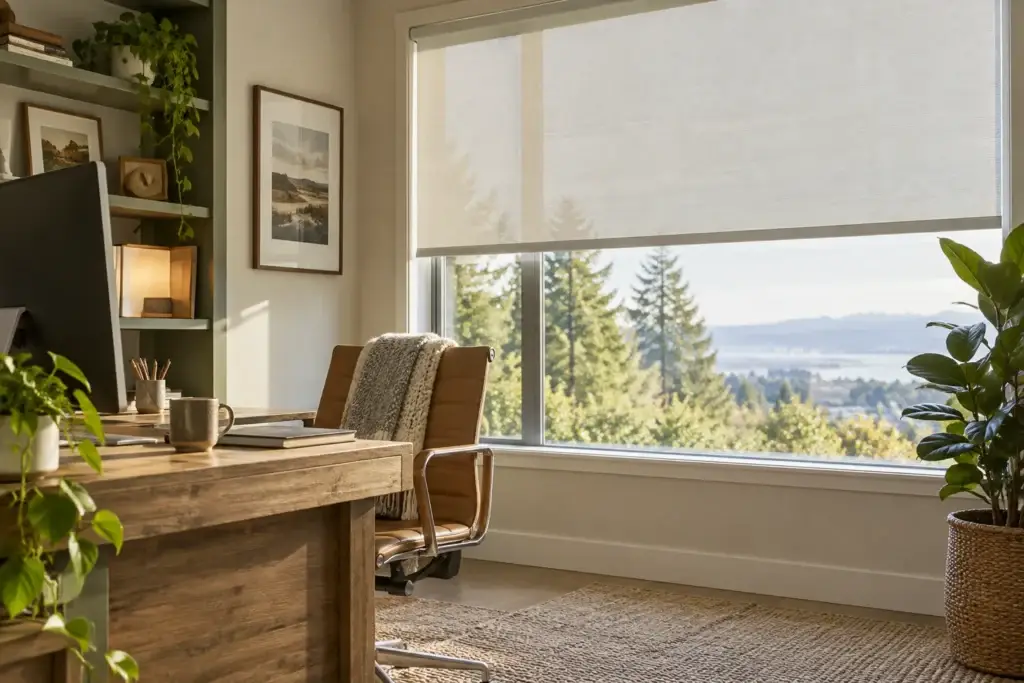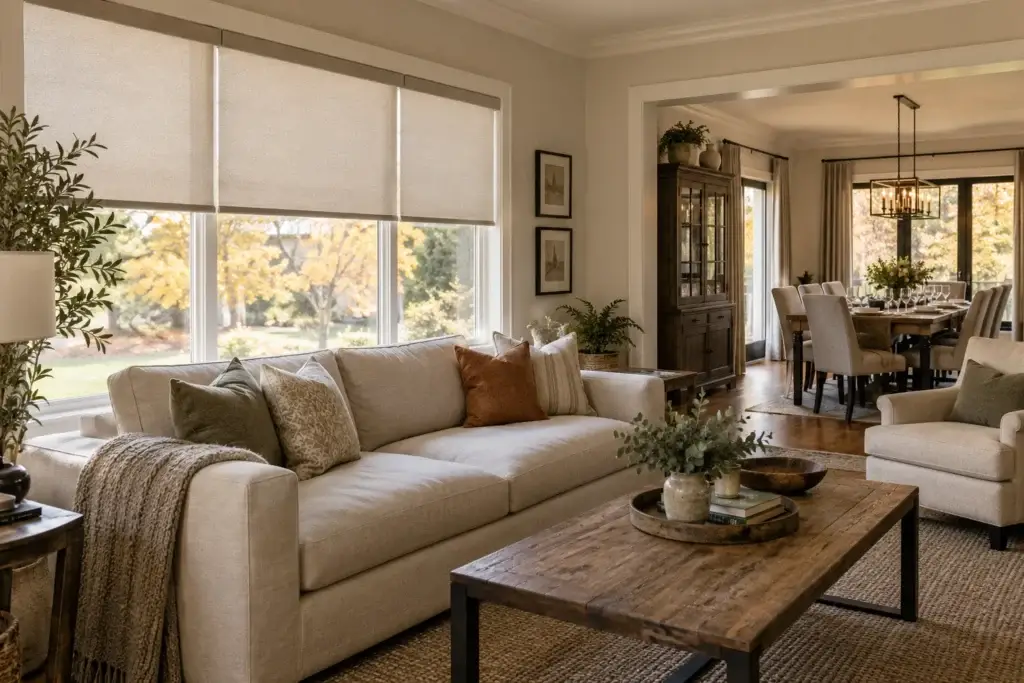
The short version: Yes. Drapery can be layered with shutters or roller shades when both systems are measured and mounted as one plan. Shutters need room for their panels to swing; shades need an unobstructed path to raise and lower. Rod projection, mounting height, side-stack space, and control access decide whether the combination works comfortably.
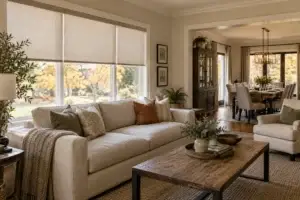
Layering can make a room more flexible. The inner treatment handles daily light control, while drapery adds softness, texture, or a second privacy option. Problems appear when one system is selected without checking how the other opens.
How does drapery work with shutters?
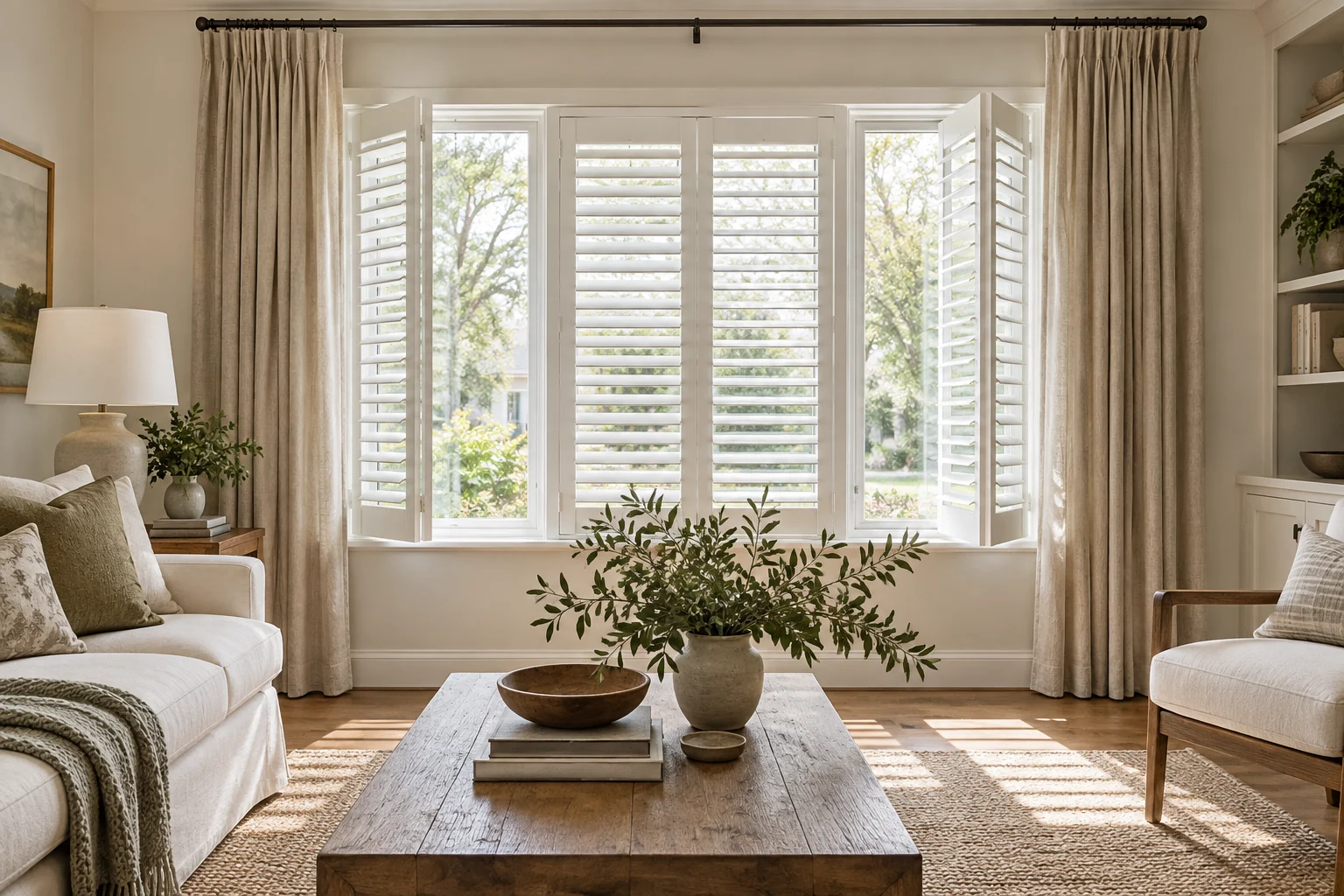
Shutters are an architectural layer that stays close to the window. Drapery can frame the opening or close in front of it, but the rod and fabric stack must clear the shutter frame and the arc of each panel. A rod mounted too close can prevent panels from opening fully. A narrow wall beside the window may leave nowhere for the drapery to stack without covering glass.
Decide whether the drapes are decorative side panels or functional closing panels before measuring. The difference changes fabric fullness, hardware strength, and required space.
How does drapery work with roller shades?
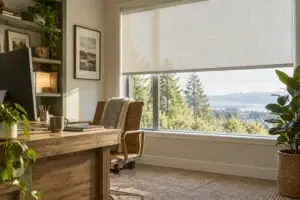
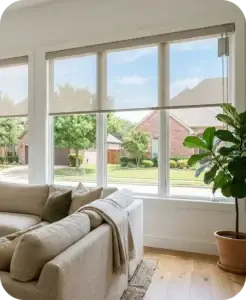
Roller shades can provide daytime glare control while drapes create a softer finish or stronger privacy at night. Determine whether the shade fits inside the opening or mounts above it, then confirm that the drapery rod and brackets clear the cassette, fascia, and shade path. A motorized shade also needs access to its controls or charging point.
Which combination fits which goal?
| Goal | Useful approach | Measure before ordering |
|---|---|---|
| Architectural detail | Shutters with side panels | Panel swing and side stack |
| Daylight plus softness | Light-filtering roller shade with drapery | Shade clearance and rod projection |
| Flexible privacy | Adjustable inner treatment and closing lined drapes | Fabric overlap, room-side clearance, and light gaps |
What should be checked at the appointment?
- Open the window, shutter panels, and door hardware to map the moving parts.
- Identify outlets, trim, built-ins, furniture, and ceiling height.
- Choose whether drapes will close or only frame the window.
- Review fabric, lining, heading style, rod finish, and stack direction together.
Custom Shade & Shutter offers manual and motorized drapery, shutters, and interior shades. Request a measured plan that shows both layers before ordering.