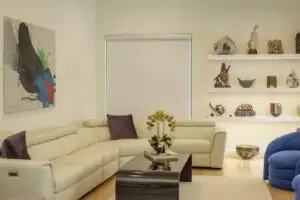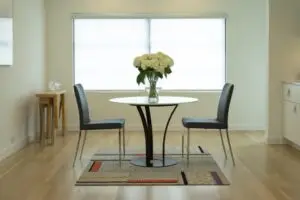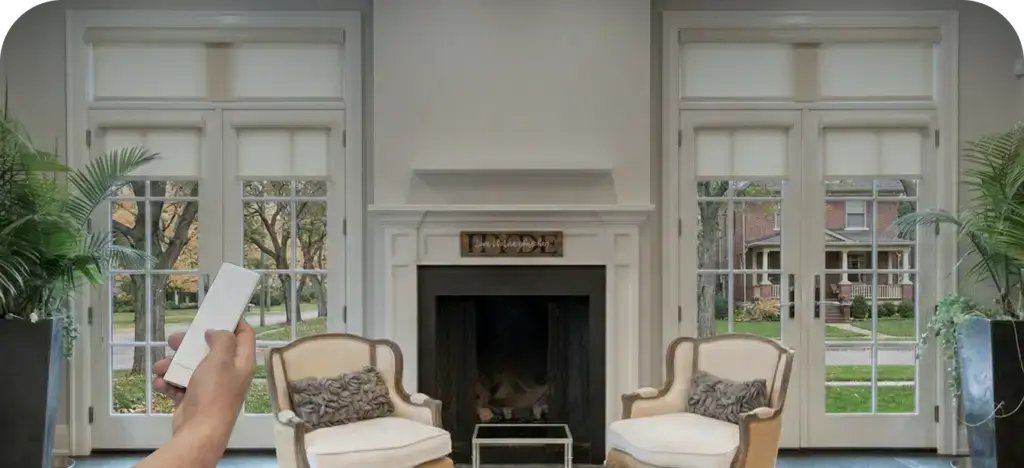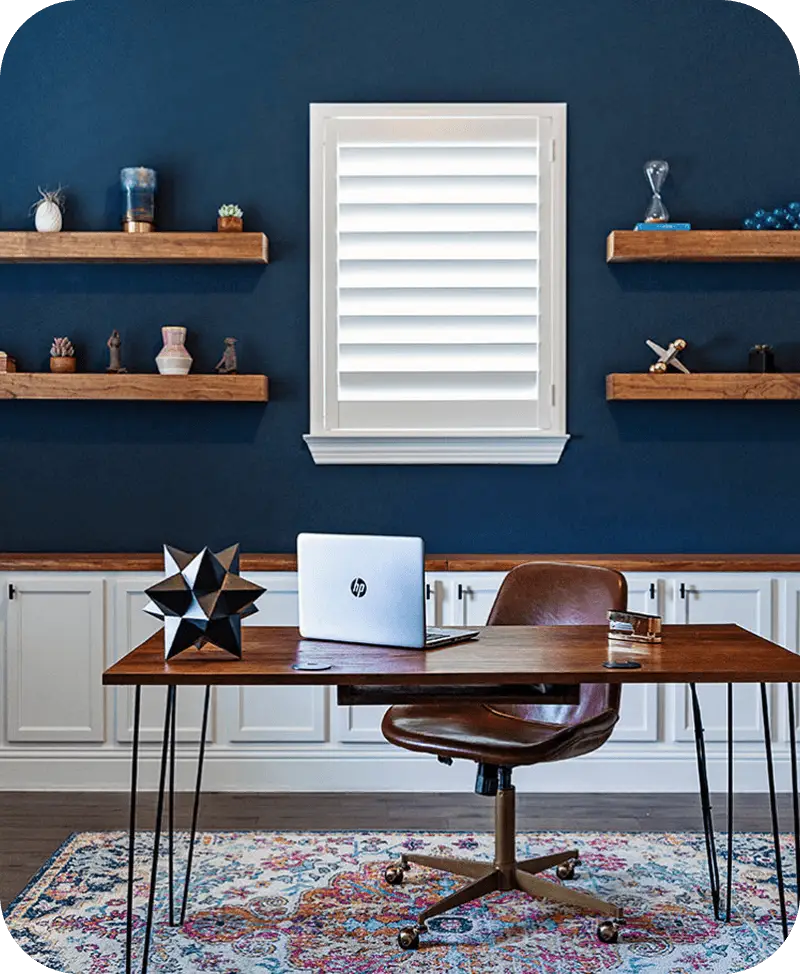
The short version: Shades can reduce ultraviolet and visible light reaching floors, rugs, furniture, art, and fabrics, which slows fading. Performance depends on the fabric, openness, color, fit, and how often the shade is lowered. No ordinary shade prevents all light damage, so ask for product-specific performance data instead of assuming “solar” means total UV protection.
Sun fading is a dose problem. Light intensity and exposure time both matter, and the damage accumulates. The National Park Service notes that light damage to textiles is cumulative and irreversible. UV can accelerate fading and embrittlement, while visible light can also change dyes, wood stains, finishes, paper, photographs, and artwork.
How much UV do window shades block?
There is no single number for all roller shades. A dense blackout fabric may block nearly all direct light through the fabric, while an open solar screen preserves more view and daylight. The exact UV transmission depends on the tested fabric and should come from its technical data sheet. Edge gaps, uncovered glass, time of day, and reflections still allow light into the room.
Do not use a fabric’s openness percentage as a guaranteed UV-blocking percentage. Openness describes the amount of open area in a woven screen. It influences view, glare, and solar performance, but it is not automatically the same as laboratory-measured UV transmission.
Which window treatment protects interiors best?
| Treatment | Light-control strength | Best fit |
|---|---|---|
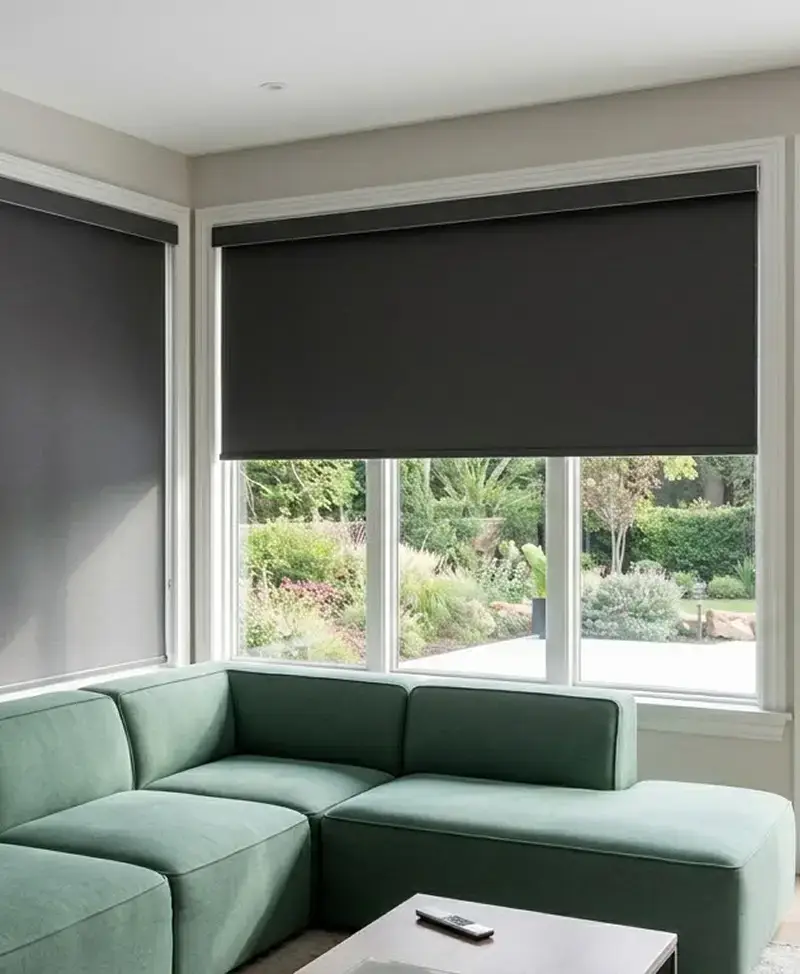
| Blackout roller shade | Very high through the fabric; edge gaps remain | Bedrooms, media rooms, and highly sensitive furnishings |
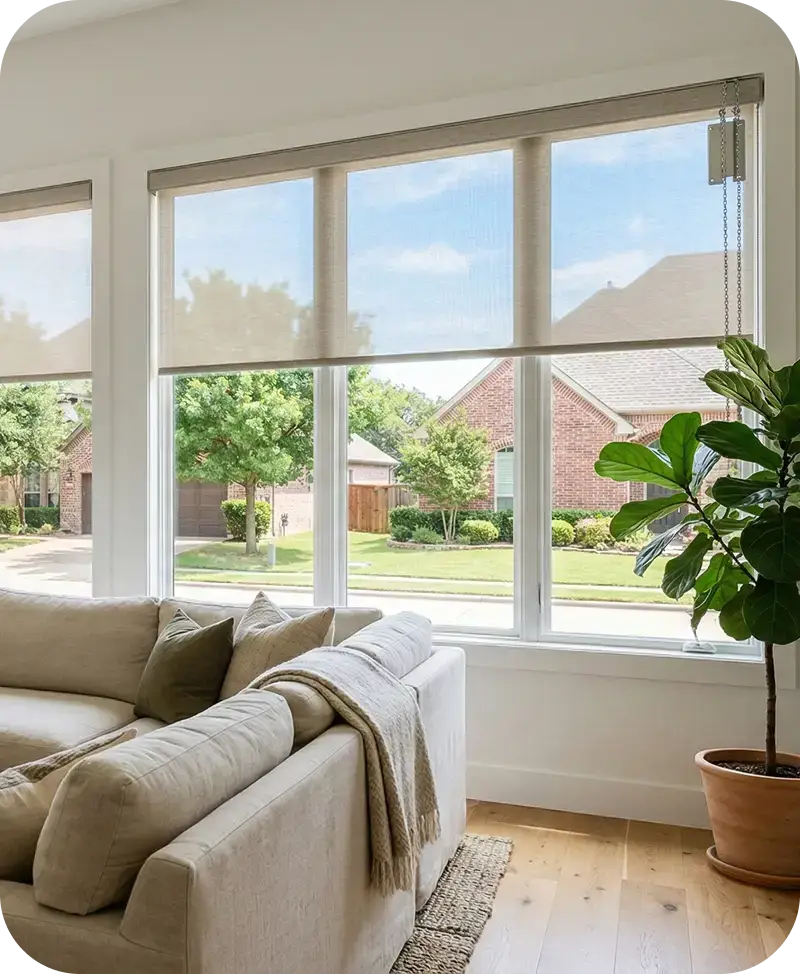
| Solar-screen roller shade | Varies by fabric and openness | Glare and fading control while preserving a daytime view |
| Light-filtering roller shade | Diffuses direct sun; exact transmission varies | Living areas that need softer daylight and privacy |
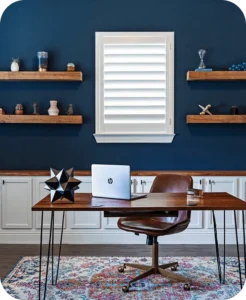
| Plantation shutter | Adjustable; closed louvers provide strong coverage | Durable, architectural light control |
| Custom drapery with lining | Can provide strong coverage when fully closed | Large openings, layered design, and soft finishes |
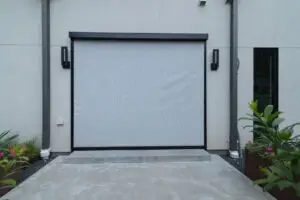
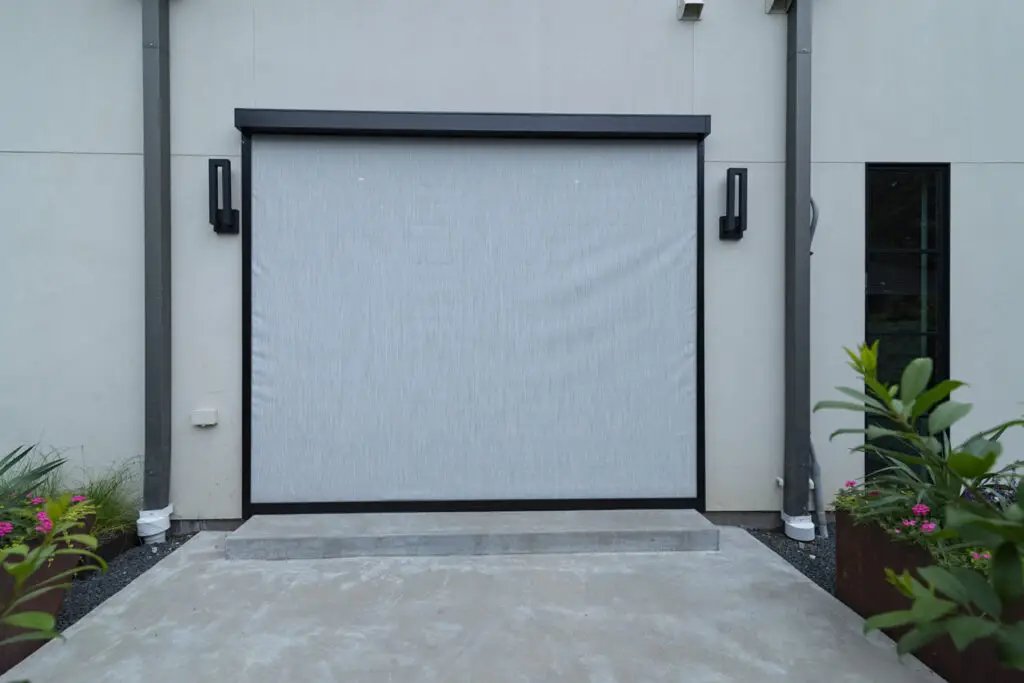
| Exterior patio shade | Intercepts sunlight before it reaches the glass | Hot exposures, patios, and large glazed openings |
What fabrics should you choose for west-facing DFW windows?
West-facing glass often receives intense afternoon sun when rooms are occupied and temperatures are high. Start with a solar-screen fabric if maintaining a daytime view is important. Lower openness and darker exterior-facing colors often improve glare control, but color, view, heat, and exterior appearance must be balanced with the fabric’s published data. Use blackout or a side-channel system where maximum coverage matters more than view.
Do motorized shades prevent more fading?
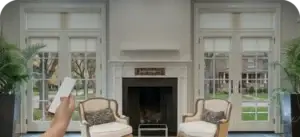
The motor does not change the fabric’s optical performance, but automation can improve consistency. A schedule can lower shades before direct sun reaches a wood floor or sofa and raise them after the exposure passes. This is useful on high windows, large openings, or rooms where manual shades are routinely left open.
How can you reduce fading without making the room dark?
- Map which windows receive direct sun and at what time of day.
- Place the most sensitive art, textiles, and wood away from that path when possible.
- Select a solar or light-filtering fabric with published transmission data.
- Use dual shades when you need daytime view and stronger room-darkening later.
- Automate shade movement during predictable high-exposure hours.
- Layer drapery or shutters where appearance and stronger coverage are both priorities.
Fading is cumulative. A treatment that is easy to use at the right time can protect better than a stronger treatment that stays open.
Can window film and shades be used together?
Sometimes, but verify compatibility with the glass manufacturer and window warranty before applying film. Film may reduce specific wavelengths while a shade manages glare, privacy, and total light exposure. A layered approach can be effective, but heat buildup and insulated-glass conditions make professional review important.
Who installs UV-reducing shades in Dallas-Fort Worth?
Custom Shade & Shutter offers screen, light-filtering, room-darkening, blackout, zebra, and woven-wood roller-shade options, plus plantation shutters, custom drapery, and exterior patio shades. Request a free DFW consultation and bring the floor, furniture, artwork, and view priorities for each room.
Sources
- Custom Shade & Shutter, interior shade fabrics, controls, and configurations.
- Custom Shade & Shutter, exterior shade fabrics and side-guidance options.
- National Park Service, Museum Handbook guidance on cumulative light exposure and irreversible fading.
- National Park Service, reducing visible and ultraviolet light damage to interior wood finishes.
- U.S. Department of Energy, residential window attachments and solar heat-gain guidance.